Filter by topic and date
IESG Retreat 2018
- Alissa Cooper IETF Chair
4 May 2018
At the end of April the Internet Engineering Steering Group (IESG) gathered in Paris for its 2018 retreat.

With three new area directors — Ignas Bagdonas in Operations and Management, Martin Vigoureux in Routing, and Benjamin Kaduk in Security — it was a good opportunity for us to get to know one another better and for those of us who have been serving a little longer to come to closure on some topics that we've been debating for quite some time. We also met for one day jointly with the Internet Architecture Board (IAB).
Together with the IAB we discussed "infrastructure ossification," where some widely used IETF protocols have been so successfully extended that they are in danger of becoming too complex to understand fully and implement correctly. An example of this was provided at IETF 101 in a presentation on the "DNS camel". Riffing on that, we explored whether HTTP is another example where the combination of protocol success and protocol complexity have produced similar or different results to the DNS case. We realized that there may be further work to do in the vein of RFC 5218 ("What Makes for a Successful Protocol?") to describe design patterns that can yield wild protocol success in the form of wide deployment without having that successful uptake also be the protocol's undoing.
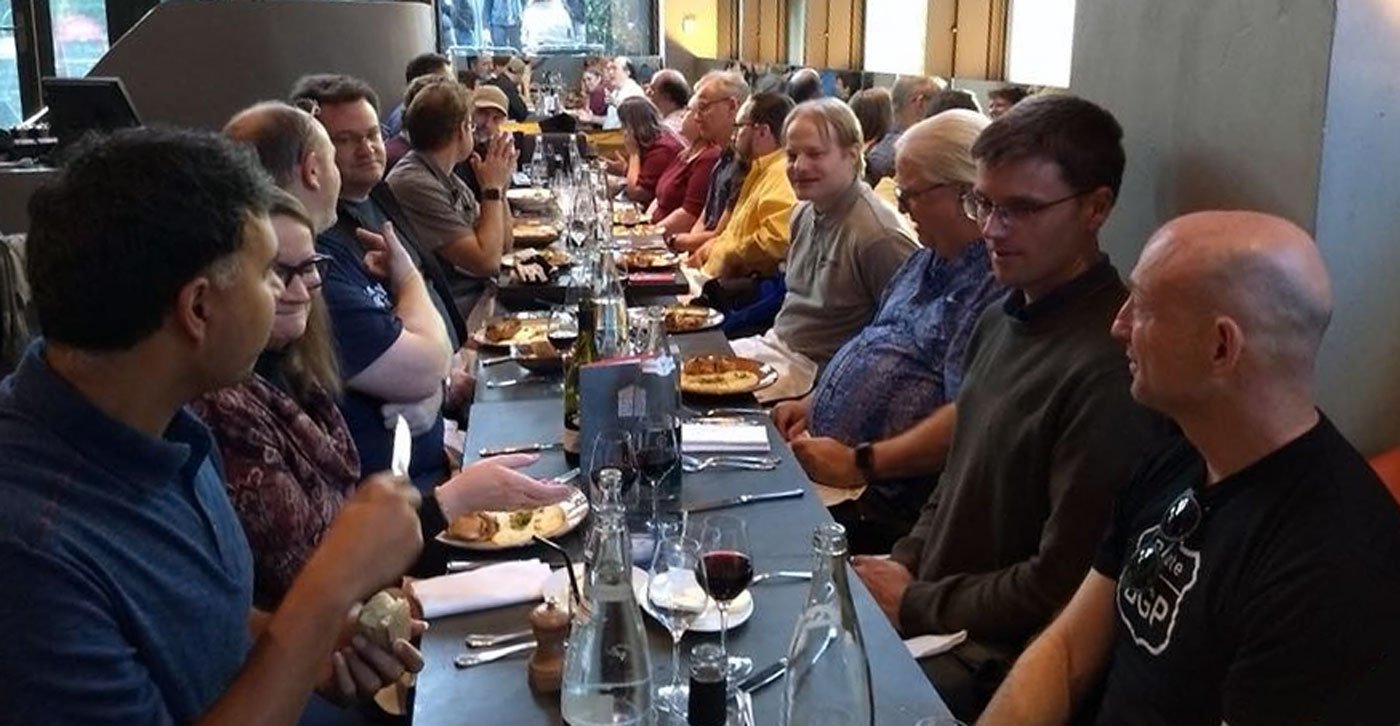
During the IESG-only portion of the retreat we discussed several process-related issues.
Understanding and navigating IETF processes can be difficult for individuals without previous experience working through them. We spent a significant portion of our time discussing various proposals to help new work flourish in the IETF and to help identify and support new participants. You'll be seeing some changes as a result: more advance notice to remind the community about the Birds of a Feather (BoF) deadline, encouragement embedded in our Important Dates to those thinking about proposing a BoF to alert the IESG about such proposals as soon as possible, and updated material on the IETF web site to make it easier for newcomers to understand the pathways by which new work can begin in the IETF.
We also spent some time on our own and with the IAB talking about a collection of topics related to the RFC series and document processing. We discussed some of the confusion that is caused by our current process for issuing document status changes, and a number of people in the leadership agreed to go think about ways to better combine the arguably mutable elements of our documents (errata, status changes, bis-style updates) with our current concept of immutable RFCs. The IESG also discussed some confusion we have noticed about the relationship between the status of informational RFCs and IETF consensus, and as a result a few ADs signed up to think further about how this could be clarified within the IETF document stream or the RFC series as a whole. We reviewed an upcoming experiment involving a few authors' use of Github to process changes during AUTH48. And we adopted a new procedure for scheduling documents on IESG telechats, such that under normal circumstances documents will be placed on telechats in the order in which their ballots were issued.
As always, feedback on topics that you think the IESG should be tackling is welcome at iesg@ietf.org.
Bibliography
-
[1]RFC 5218
What Makes for a Successful Protocol?
The Internet community has specified a large number of protocols to date, and these protocols have achieved varying degrees of success. Based on case studies, this document attempts to ascertain factors that contribute to or hinder a protocol's success. It is hoped that these observations can ser…